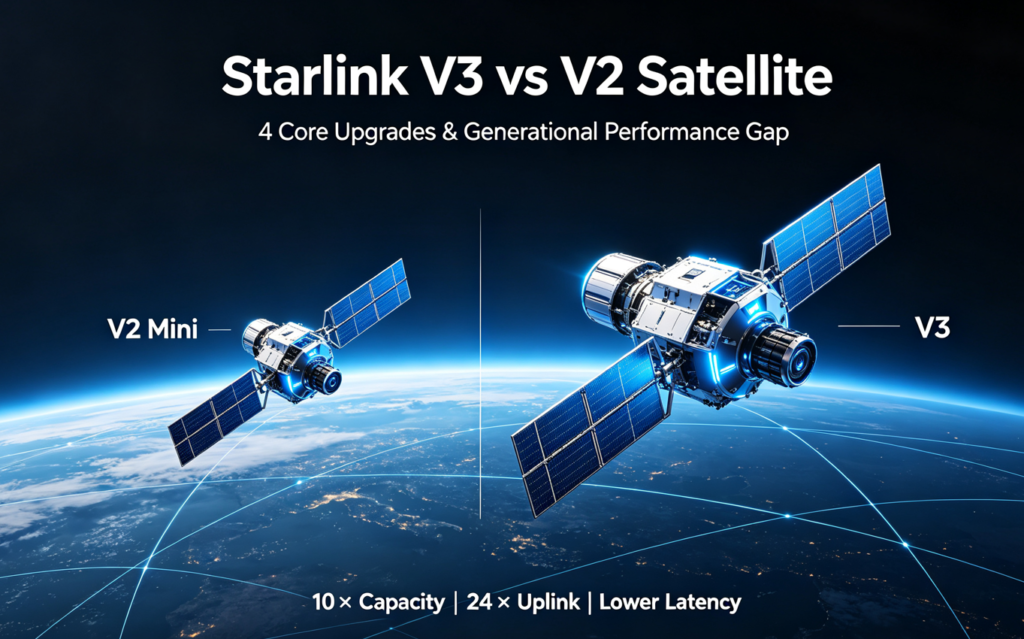
SpaceX’s new Starlink V3 satellite represents a full generational leap over the existing V2 Mini fleet. After completing validation flights on Starship 13 with 20 test units, the next-generation LEO satellite will redefine global satellite internet capacity, speed and latency. Below we break down four decisive upgrades that separate Starlink V3 from V2 Mini, and explain how these improvements change real-world outdoor satellite internet for RV, marine, rural home and remote camping users.
1. 10× Higher Downlink Capacity for Denser User Support
Starlink V3 adopts fully redesigned phased-array antennas, delivering 1 Tbps single-satellite communication capacity, over 10 times the bandwidth of V2 Mini.
In practical scenarios, one V3 satellite can simultaneously stream roughly 1,000 4K videos without congestion, or support 1 million concurrent HD video calls.
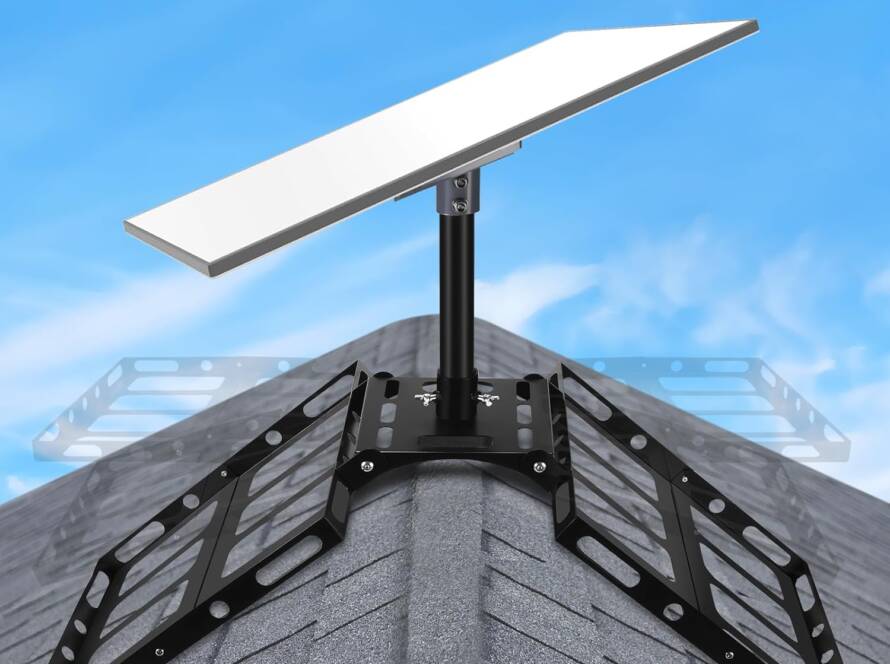
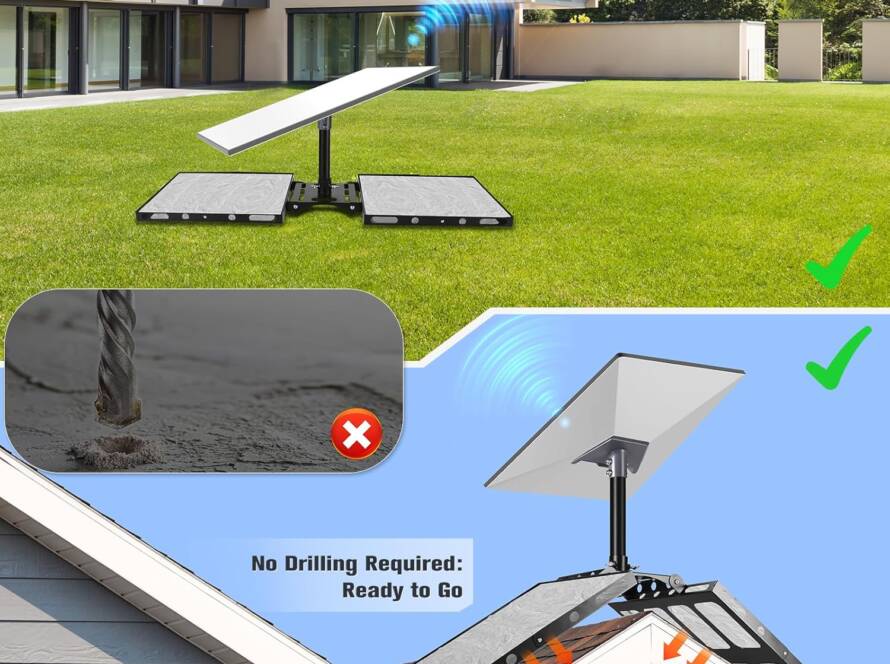
For end users, higher satellite capacity directly reduces peak-hour network throttling. Rural households, RV campers and marine vessels will enjoy far more stable speeds during evening rush hours. If you own a Starlink Gen3 / 4/4X terminal, choosing a heavy-duty Starlink roof mount, eave bracket or pipe adapter ensures unobstructed line-of-sight to maximize the new V3 satellite bandwidth.
3. Lower Orbit Cuts Latency by Nearly Half
Starlink V3 operates at 350 km ultra-low LEO orbit, compared with 550 km for V2 Mini. Shorter signal travel distance, paired with upgraded laser inter-satellite links, drastically reduces round-trip delay.
Network latency drops from 40–50 ms on V2 to below 20 ms, with theoretical minimum latency reaching 5 ms. Such low latency closes the performance gap between satellite internet and terrestrial fiber, supporting competitive online gaming, real-time video conferences and low-delay remote operations.
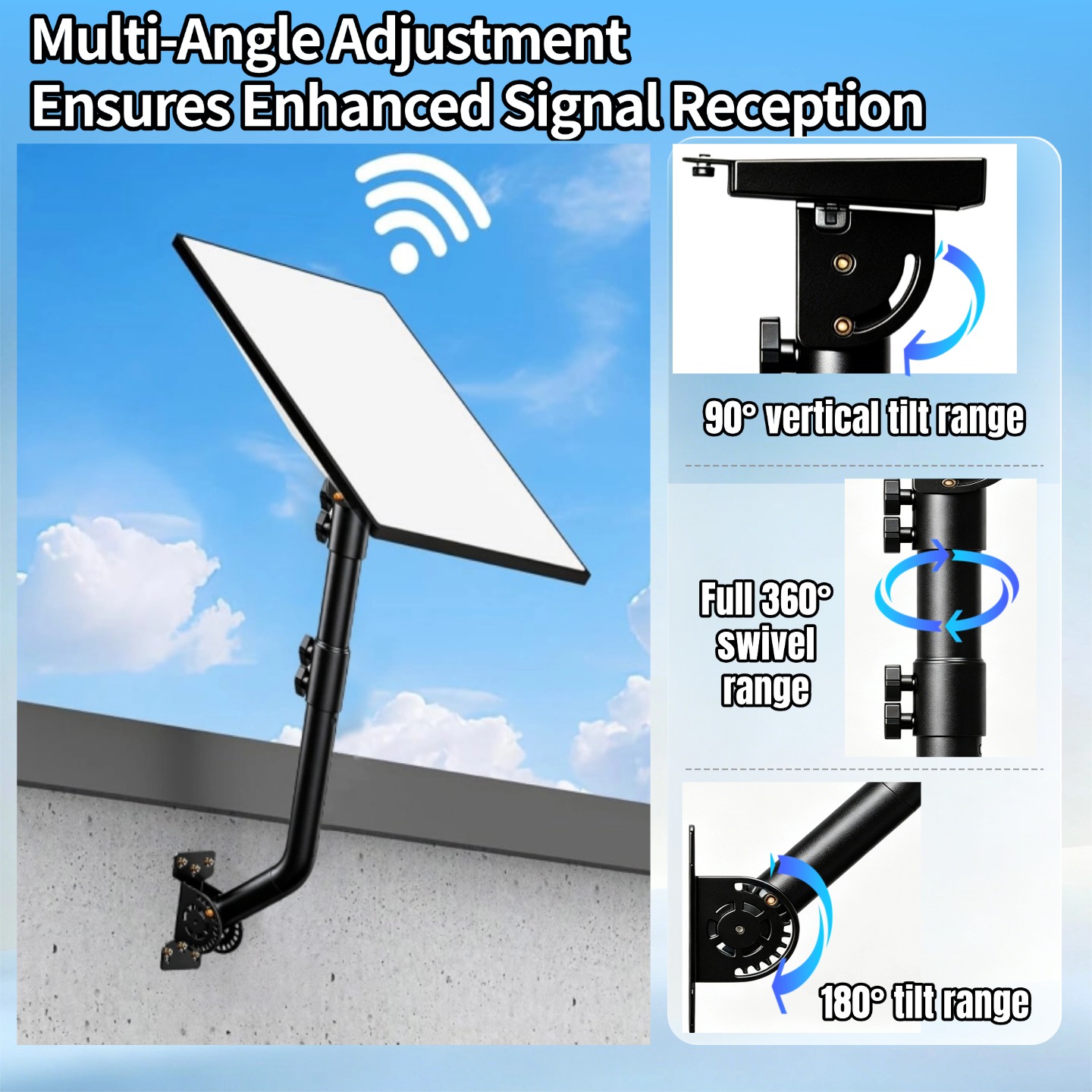
To capture optimal satellite signals continuously, many users upgrade to 360° adjustable Starlink Gen3 roof mount kits for flexible azimuth and elevation tuning.
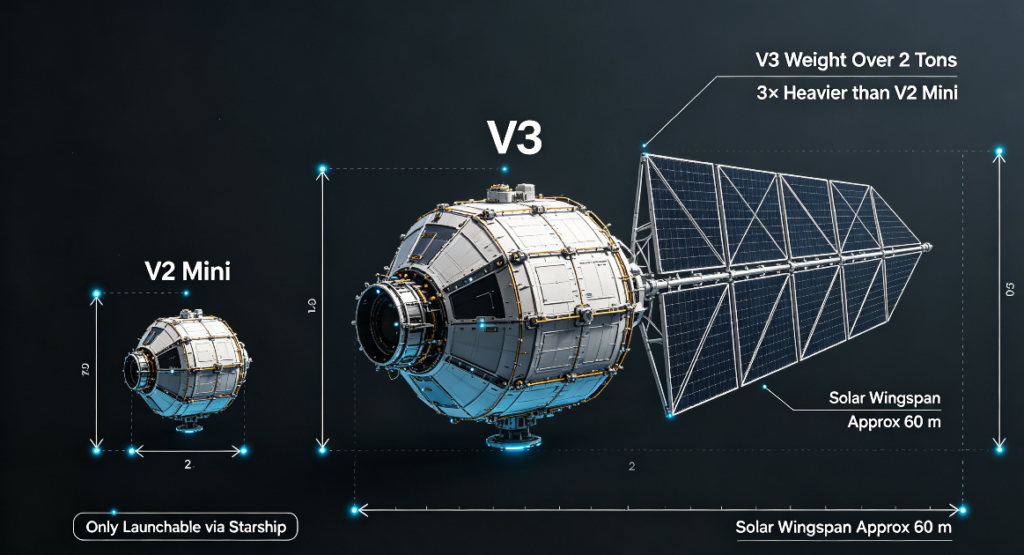
4. Oversized Reinforced Structure – Only Launchable via Starship
Unlike compact V2 Mini, Starlink V3 features massive structural upgrades. Each satellite weighs over 2 tons, more than 3× the mass of V2 Mini. When fully deployed, solar panels stretch 60 meters wide.
The expanded size exceeds Falcon 9 fairing limits, meaning V3 can only launch on Starship. During the 13th Starship test flight, 20 V3 prototypes were sent into orbit for verification. Once mass production begins, Starship can carry up to 60 V3 satellites per mission, adding 60 Tbps total network bandwidth in one launch. This deployment speed will rapidly expand global Starlink coverage.